
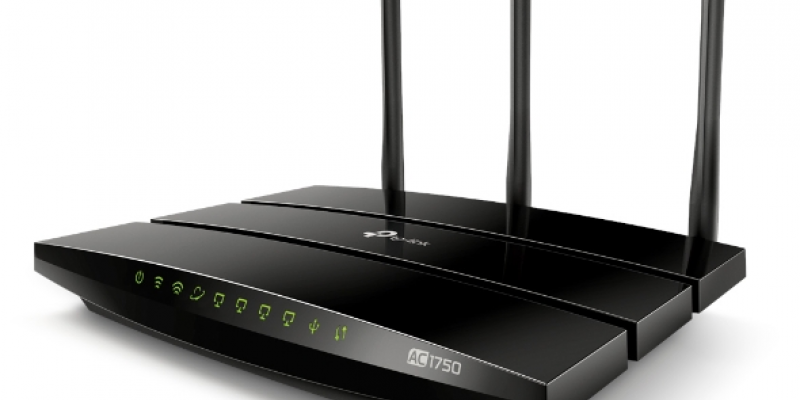
After a few days of use, the WLAN sometimes becomes unstable and the router needs to be rebooted. However there is no function in the router to schedule a reboot on a daily basis. Instead of doing it manually every day, I googled around and found this post. The script is copied from the post and text output is customized to my needs. The script is as follows:
#!/bin/bash

# Reboot TP Link router on modern firmware (tested only on WDR4300/N750)
# Author: Nicolai Spohrer <nicolai@xeve.de>
#
# This program is free software; you can redistribute it and/or modify
# it under the terms of the GNU General Public License as published by
# the Free Software Foundation; either version 3 of the License, or
# (at your option) any later version.

if [ "$#" -ne 3 ]; then
   echo "Illegal number of parameters";
   echo "Usage: $0 ROUTER_IP USERNAME PASSWORD";
    exit;
fi

IP=$1;
USERNAME=$2;
PASSWORD=$3;

MAX_TRIES=6; # maximum number of reboot attempts
SYSLOG_TAG="restart-archer-c7.sh"

# From https://stackoverflow.com/questions/296536/urlencode-from-a-bash-script/10660730#10660730
rawurlencode() {
 local string="${1}"
 local strlen=${#string}
 local encoded=""

 for (( pos=0 ; pos<strlen ; pos++ )); do
    c=${string:$pos:1}
    case "$c" in
       [-_.~a-zA-Z0-9] ) o="${c}" ;;
        * )               printf -v o '%%%02x' "'$c"
    esac
    encoded+="${o}"
 done
 echo "${encoded}"    # You can either set a return variable (FASTER)
 REPLY="${encoded}"   #+or echo the result (EASIER)... or both... :p
}

PASSWORD_MD5=`echo -n $PASSWORD | md5sum | cut -d " " -f 1`;
COOKIE_B64_PART=`echo -n $USERNAME":"$(echo -n $PASSWORD_MD5)|base64`;
COOKIEVAL_UNENCODED=`echo -n "Basic $COOKIE_B64_PART"`;
COOKIEVAL=`rawurlencode "$COOKIEVAL_UNENCODED"`

GET_KEY_URL=`echo "http://$IP/userRpm/LoginRpm.htm?Save=Save"`

# If the reboot sequence fails, try again $MAX_TRIES times
for i in $(seq 1 $MAX_TRIES)
do

 RESPONSE=`curl -s --cookie "Authorization=$COOKIEVAL" $GET_KEY_URL`;
 KEY=`echo $RESPONSE |  head -n 1 | cut -d '/' -f 4` # extract key from post-login-page

  sleep 1;

 REBOOT_URL="http://"$IP"/"$KEY"/userRpm/SysRebootRpm.htm?Reboot=Reboot";
 REBOOT_REFERER_URL="http://"$IP"/"$KEY"/userRpm/SysRebootRpm.htm";

 FINAL_RESPONSE=`curl -s --cookie "Authorization=$COOKIEVAL" --referer $REBOOT_REFERER_URL $REBOOT_URL`;

 MATCHES=`echo $FINAL_RESPONSE | grep -c "Restarting..."`
 if [ $MATCHES -gt 0 ]; then
   # Success!
   break
 else
   # echo "Failed on try $i..."
   logger -t $SYSLOG_TAG "Failed on try $i...";
    sleep 1;
 fi
done

if [ $MATCHES -gt 0 ]; then
 SUCCESS_TEXT="Successfully triggered reboot of $IP.";
 #echo $SUCCESS_TEXT;
 logger -t $SYSLOG_TAG $SUCCESS_TEXT;
else
 FAILURE_TEXT="Error - Apparently failed to trigger reboot of $IP.";
 #echo $FAILURE_TEXT;
 logger -t $SYSLOG_TAG $FAILURE_TEXT;

 # Log failure details
 MYRAND=$RANDOM;
 MYFILES="/tmp/reboot-failure-$MYRAND";
 echo $RESPONSE > "$MYFILES-response1"
 echo $FINAL_RESPONSE > "$MYFILES-finalresponse"

  logger -t $SYSLOG_TAG "Return results logged to $MYFILES-response1 and $MYFILES-finalresponse";

 exit 1;
fi